Note: This guide describes treadmill recording in an earlier version of FlexiGait. Gait measurement is currently provided to clinics and hospitals through the clinician web portal for over-ground walking; treadmill walking and running are coming soon.
Introduction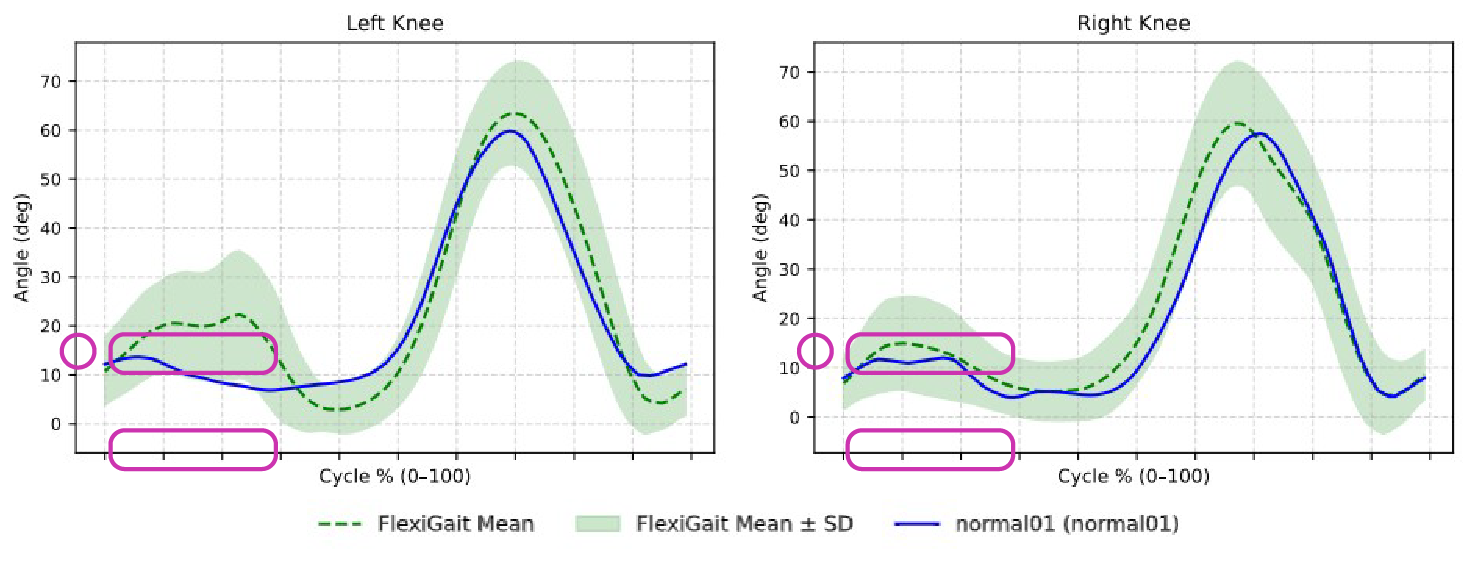
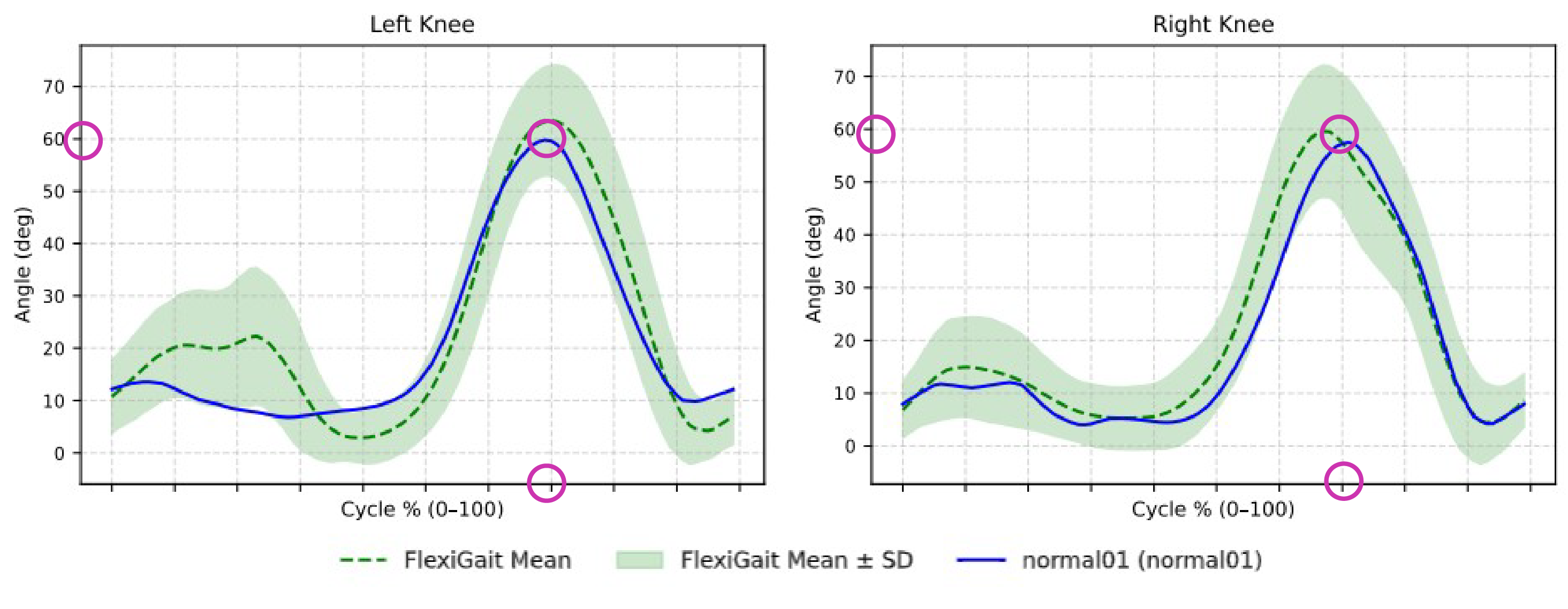
2. The maximum knee angle in the swing phase: the value of this angle in different periods of walking for the left and right leg is about 60 degrees, and these values occur in the beginning of the swing phase, that is, about 65% of the cycles.
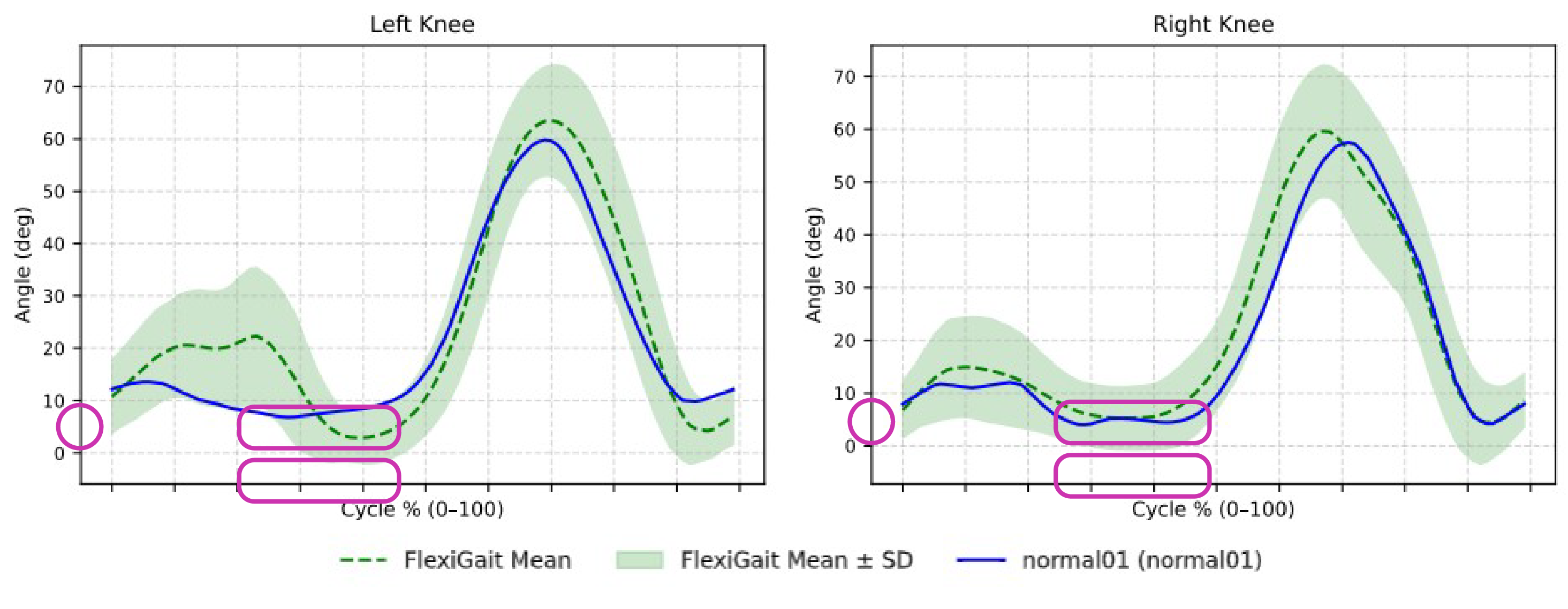
3. The minimum knee angle in the stationary phase: for the attached video, the value of this angle in different periods of walking is about 0-10 degrees, which can be seen in the range of 20-50% of each cycle.
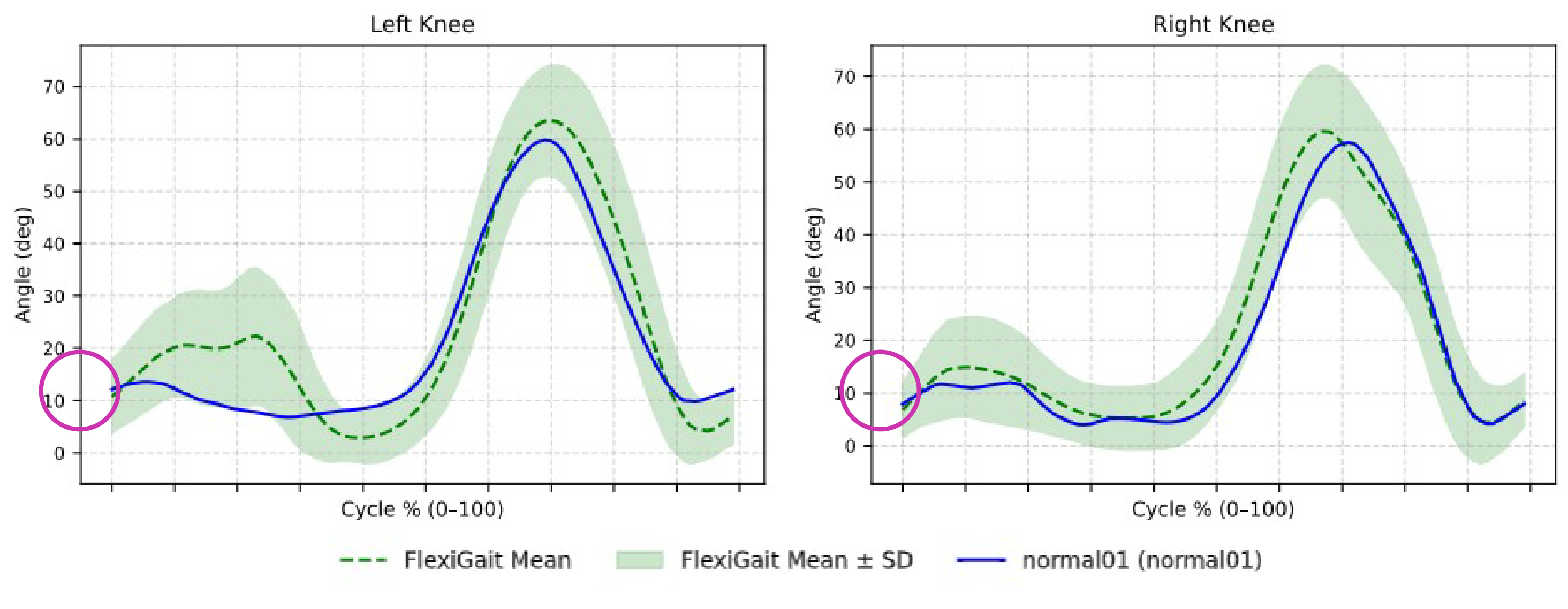
4. The value of the knee angle at the moment of the start of the cycle: for the attached video, the value of this angle in different periods of walking for the left and right leg is about 15 degrees, respectively.
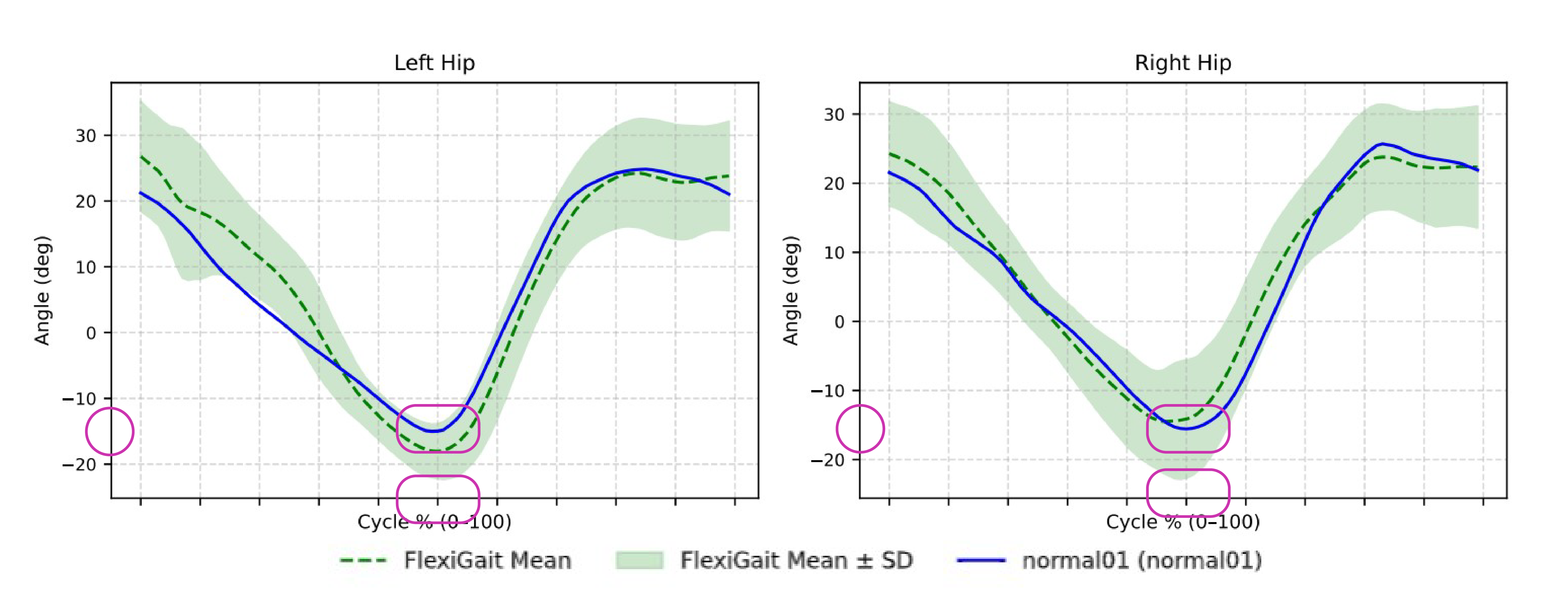
5. Minimum hip angle: The minimum value of the hip angle in different periods of walking is about -15 degrees and can be seen in about 50% of each cycle, which shows the maximum amount of extension of this joint.
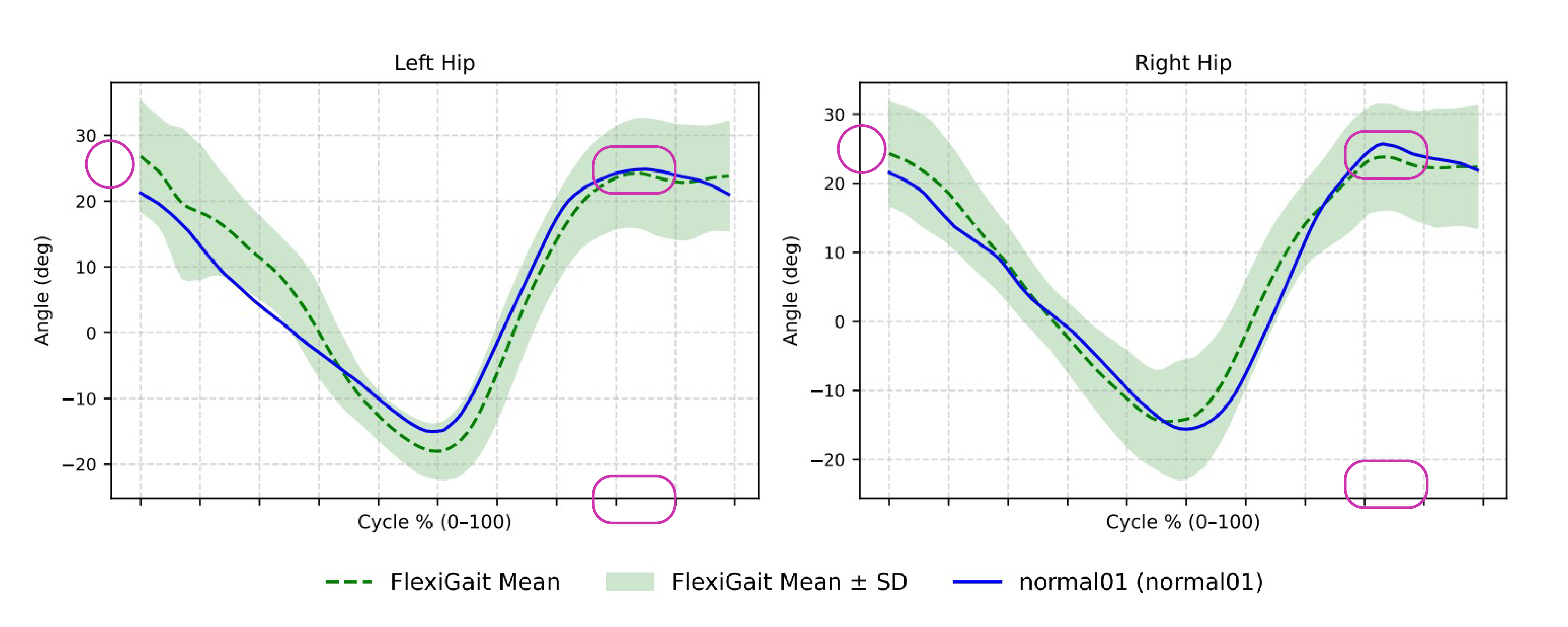
6. The maximum value of the hip angle: the value of this angle in different periods of walking is about 25 degrees, which shows the maximum amount of flexion of this joint.
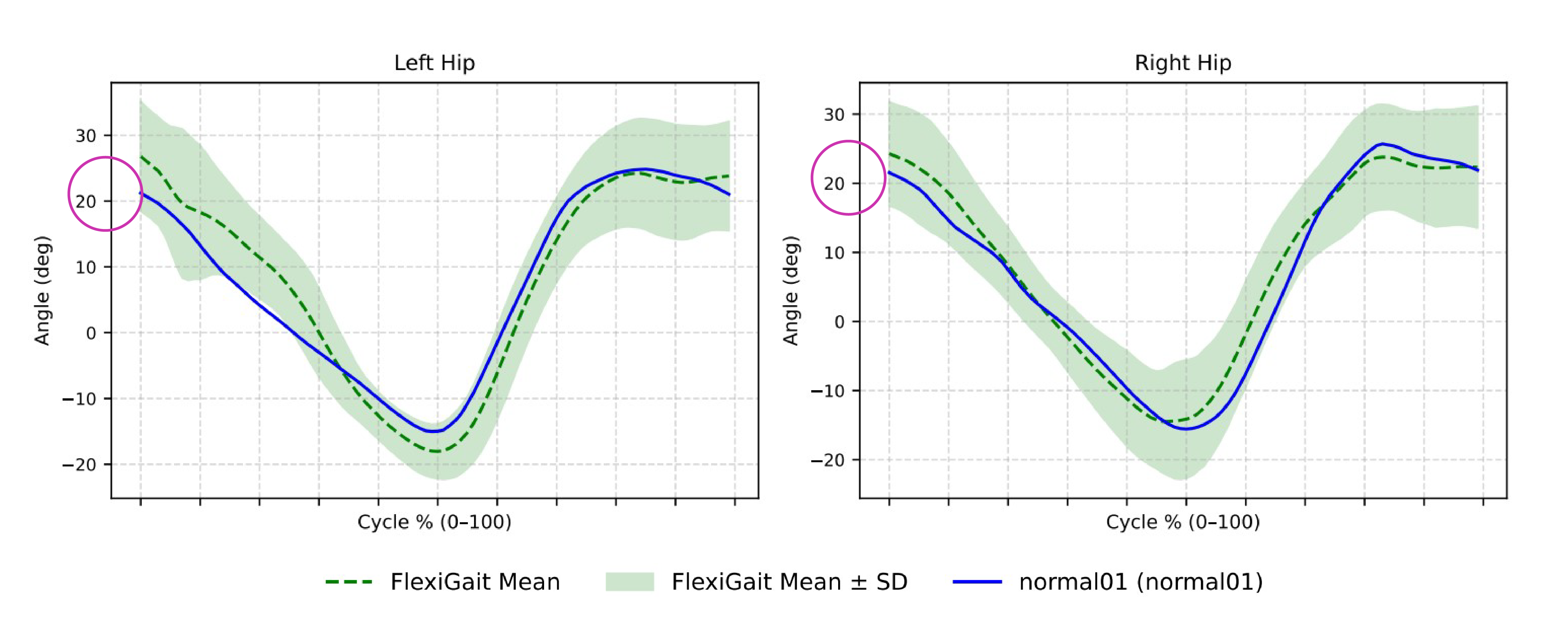
7. The value of the hip angle at the start of the cycle: the value of this angle in different periods of walking is about 20 degrees.
8. Symmetry of left and right leg and range of motion of joints
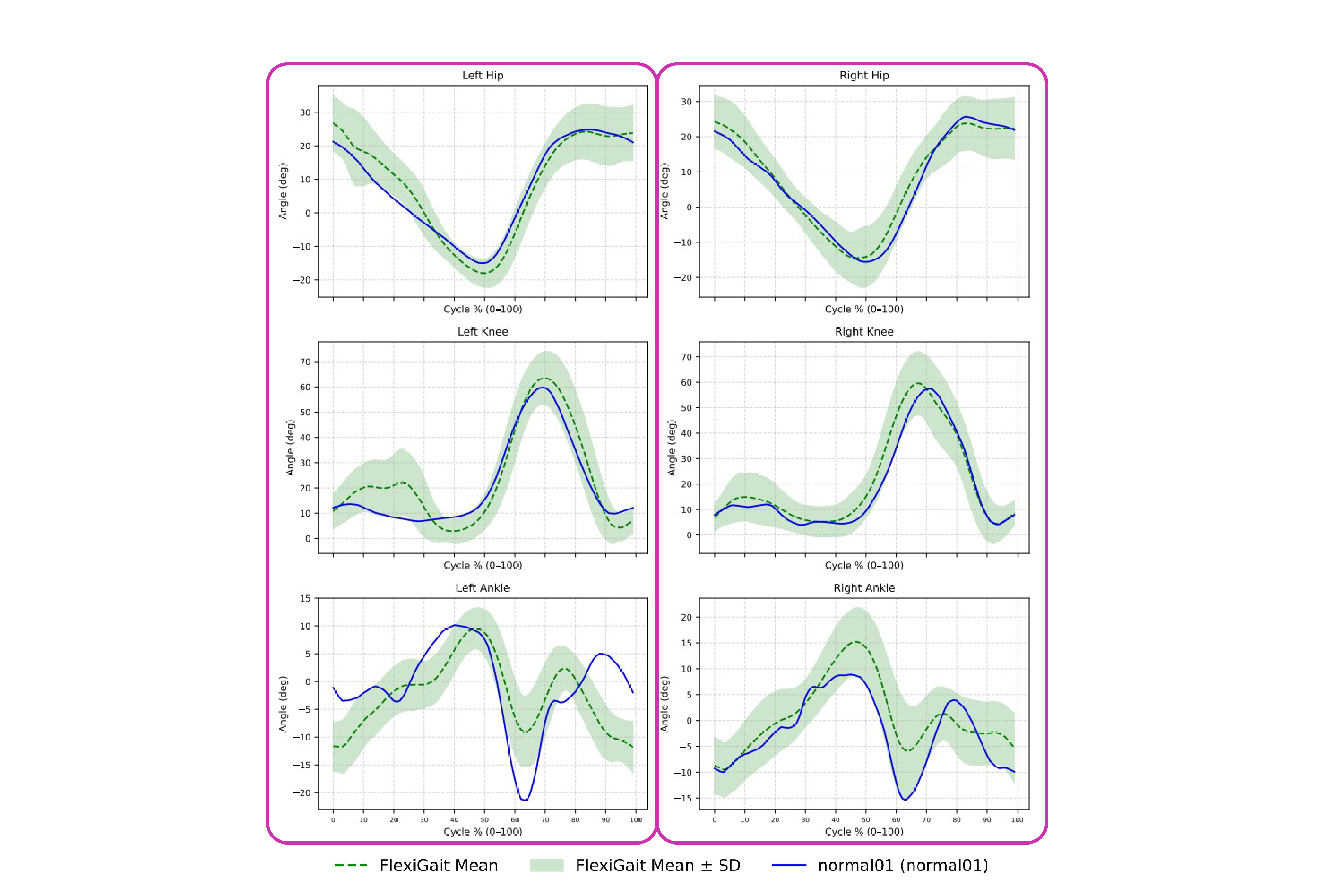
In conclusion, treadmill gait analysis using tools like FlexiTrace provides valuable insights into human movement. By examining parameters such as maximum and minimum joint angles (hip, knee, and ankle) during different phases of the gait cycle, therapists and rehabilitation specialists can objectively assess movement patterns, identify asymmetries between limbs, and quantify the range of motion. This data-driven approach allows for the development of targeted interventions and personalized exercise programs to improve gait, address injuries, and enhance athletic performance. The specific examples provided, like knee and hip angle variations throughout the gait cycle, illustrate how these parameters can be used to understand and optimize movement.
[Previous: Gait Analysis Methods]

FlexiTrace Offers AI-powered Gait and Posture Analysis